Monday, October 30, 2006

061020 Labor Day Part 1


Monday, October 23 was Labor Day in New Zealand and my friend Nils and I had high hopes of spending the long weekend tramping in the Alps and exploring the glaciers on the west coast of the South Island. Nils is a physics student from Germany and we had each been planning on traveling independently over the weekend, but we decided to travel together once we realized that the other was planning on traveling as well. However, our plans were hampered by what looked like a weekend of rain across the entire island. New Zealand lies in the “Roaring Forties” (Christchurch is approximately 43.5 latitude) and weather can change quite quickly. Weather reports for the mountains can only forecast out one day due to the speed that weather can change. Winds from the south can bring rain to the east coast of the island, but the west coast can be dry. Winds from the west will dump rain along the coast, but Canterbury will be dry. Or the entire north can be sheltered from the rain by the mountains. So, we decided to be flexible and to decide where we would go just before we departed, based on the most recent weather reports.

As neither of us owns a car, we rented one from one of the many car rental agencies by the airport. For $33 a day, we had a brand new Daihatsu which was boxy and lacked the power to make bold passes on the highway, but which worked out well. The steering wheel was located on the right side of the car and I kept catching myself reaching to my left to grasp the seatbelt which was of course foolish since it was on the right. The car was a manual and so the gearshift was on the left. Fortunately, the order of the gears is the same as a car in the US with the first and second gears being on the left and fifth and reverse gears being on the right. The really annoying thing is that the levers for the directional signals and the windshield wipers are swapped. Whenever you try to signal that you are turning, you wind up turning on the windshield wipers instead of the directional. This is funny for the first half dozen times, but then becomes very, very annoying not to mention dangerous since other drivers may not be able to interpret the windshield wipers tearing across the windshield on as an indication that your car is turning.

This was my first experience driving on the left side of the road in a car and there were several important things to remember. There is the essential rule of looking right for incoming traffic before pulling out, rather than looking left as one would in the US. New Zealand also has a crazy left turn rule where basically, cars turning left must yield to all other traffic. For example, at an intersection, cars turning left have to wait for cars coming from the opposite direction which are turning right, even though the cars turning right must wait for gaps in the oncoming traffic. Rotaries (or roundabouts) are everywhere and of course, you must circle clockwise. According to our AA guide (Automotive Association) cars should have their signals on the whole time that they are in the rotary, but we never saw other cars doing it, but we did see cars pull out in front of us when we did not have our signal on (but our windshield wipers were flying across our windshield like no-ones business).

We picked up our car from the airport and went back to Ilam Village where we both live to check the weather and to consult our maps. We saw that the ONLY sunny place on the whole island that would be sunny was the town of Kaikoura which lies north of Christchurch and so we decided to head there.

To use the word highway to describe the roads that we traveled is deceptive because it conjures images of wide, multilane roads with gentle grades. Not so on the South Island. The “highways” that we drove all had single lanes in each direction. The speed limit was generally 100 km/h (60mph), but this speed was not obtainable when climbing or descending in the mountains where hairpin turns or steep grades made it impossible to go the speed limit, especially for two drivers who had not had a lot of experience driving on the left and were driving a rental car with a high center of gravity. Passing of other cars is common, but tricky on the winding roads. Passing lanes are occasionally offered or slow cars would sometimes pull over to allow the others to pass.

It seems that Kiwis don’t like to spend a lot of money on bridges and why build a two lane bridge when you can get away with a single lane bridge. We would encounter a lot of these, especially on our second day of driving in the north. Signs would warn that you were approaching a single lane bridge and a sign would indicate which direction had the right of way. Sometimes our direction had the right of way, other times it was the opposing direction. The problem was that often you could not see if there were cars on the other side of the bridge due to hills or turns and so you always had to approach the one lane bridges with caution. We got so used to the single lane bridges, that two lane bridges with a lane for each direction of traffic would amaze us. We figured that areas with the two lane bridges were more wealthy communities that could afford the extra lane.

Our route to Kaikoura took us along the east coast and up into the Alps as the mountain range cut across the island towards the ocean. Although we hit “rush hour” leaving Christchurch, by the time we neared Kaikoura and were in the mountains, it was getting dark and there were fewer cars on the road. Kaikoura lies on a peninsula that juts into the Pacific Ocean. At the land end of the peninsula lie the end of the Alps where they meet the ocean. Upon arrival, we followed the signs for the city center and stopped our car at a cluster of buildings. The road paralleled the beach and the air was much colder than it had been in Christchurch. We pulled on jackets and walked along the buildings in search of a restaurant. However, after walking but 100 ft we came to the end of the buildings without much luck. What a small “city center”! This did not look good. Fortunately, my guidebook had a map of the town and we realized that the true city center was a 1/2 mile down the road. The town center was still just a one lane street with most of the restaurants closed, but we were able to find dinner and then a nondescript hostel where we stayed the night.

The town of Kaikoura may be small, but it is a huge draw to tourists due to the depth of the ocean just off the shore. (http://www.kaikoura.co.nz/) Here cold ocean currents from Antarctica meet warm water from the north creating very good conditions for krill to grow, thus attracting sperm whales, Orcas and other whales. The area was heavily settled by Moari in 1000 BC and signs of the settlements can be seen in the surrounding hills. The first European to arrive was Robert Fyffe who set up a whaling station in 1857. More recently, a whale watch company began taking people out to see the whales a few years ago and Kaikoura has been a tourist destination ever since. However, you need not be limited just to boats. There are several companies which will also take people up in small planes to see the whales from above.

We awoke early on Saturday morning because Nils was quite keen on booking a spot on a whale watch. His grandfather had been an ocean explorer and had discovered several new species in the depths of the ocean, but Nils had never been on a whale watch before. The first order of business was finding a bakery or store to buy coffee and bread for breakfast. Once back at our hostel, we called the whale watch offices at 7AM to inquire about the 7:45AM sailing. They told me that the 7:45 was fully booked but that the 10:30AM had space. During the time that Nils and I were conferring, the 10:30 filled up and so we booked spaces on the 3:30.

Since we now had several hours on our hands before the cruise, we decided to drive down to the end of the peninsula to see the place where a colony of seals had taken up residence. The area by the sea was very rocky and cliffs rose up above the sea. There were more tourists wandering about than seals, but we did see an amazing site. We were standing over one of the tidal pools when Nils spied an octopus making its way amongst the seaweed and rocks. The octopus was brownish / redish in color and about two feet long. I have never seen an octopus in the wild before, let alone in a tidal pool. We walked up the cliffs and were rewarded with views of the Alps meeting the ocean. Unfortunately, bad weather was coming and so a haze lay along the ocean and gray clouds were in the sky, but it was a neat view nonetheless.

We decided to head out to Mt Fyffe to walk up to a lookout which was supposed to be a 1 hour tramp each way. Mt Fyffe is about 1600m high and we saw other tramper with big packs who were planning on going to the top and spending the night. The way up was a wide trail that started climbing right away and never stopped climbing. In the forty-five minutes that we walked, with breaks for photos and for shedding jackets or zipping off pant legs, we climbed a little more than 600m, or better than 1/3 of the way up the mountain. It was a bit more of a workout than we were expecting. The views were nice and we could see the plains descending from the mountains to the ocean below us as we sat on a bench and ate our lunch.

We walked back down (such a steep walk burns the knees) and made our way to the southern side of the peninsula. Her we found outcroppings of layers of rock, jutting from the ocean. It was as if someone had sandwiched several layers of rock, each a few inches thick and then bent then smashed the sandwiches together, causing the sandwiches to break and to jut out at strange angles. Clinging to the rocks were shellfish with round, dark shells that were about an inch in diameter. These creatures were everywhere, but I have not been able to find out what they were. We went up a nearby walk that offered great views of the coast. The mountains ran along the coast and the lush, green hills were all about us. The ocean water was turquoise which made everything quite lovely.

We returned to town to the whale watch company’s offices which are conveniently located next to the train station for the tourist train from Christchurch to Blenheim. Upon arrival, we saw waves crashing on the nearby beach that were over 2m high. Great for surfing, bad for being out in a boat. We discovered that all of the whale watch cruises for the day had been canceled due to rough seas. So, when we had been told over the phone that the earlier cruises were full, what had really happened was that the earlier cruises had been canceled, but they didn’t want us to know that in hopes that later cruises would be able to sail.

After taking some photos on the beach of the massive clouds crowning the nearby mountain peaks, we hopped in the car and drove along the coast to the town of Blenheim, about 2 hours north of Kaikoura. There are only three highways that make the east-west crossing across the South Island and so we had to plan ahead as to where we would go next. Spending the night in Blenheim would put us in a good place to drive west the next day since the weather forecasts showed sun on the west coast.

The drive to Blenheim was along the coast with jagged rock formations on our left, and the ocean below us on the right. The rail tracks followed the road and we could see that the train plunged in and out of tunnels as it made its way. The drive was really nice and we soon were in Blenhiem in search of a hostel. We decided on one called Grapes that was in a building that had once been a maternity house. Canoes were available for free to go along the river out back and there was a kitchen for us to make our breakfast.

Thursday, October 12, 2006

061014 Port Hills

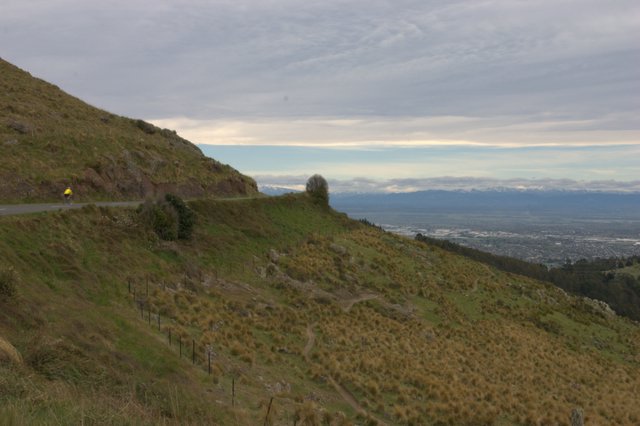
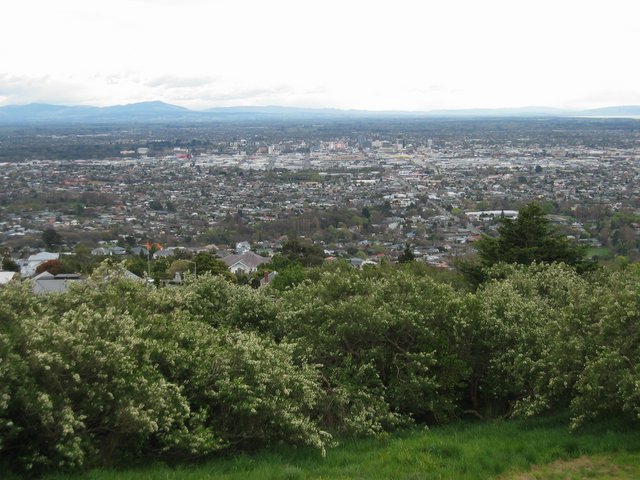
For the past two weekends, I have been taking my bicycle up the Port Hills which lie just to the south of Christchurch. The hills are 1300 feet high and the climb up the hills has been either up a steep, winding road that goes to the top or up a dirt trail that is a little further east of the road. From the top, the plain in which Christchurch sits spreads out before you as it climbs to meet the line of snow-covered mountains 30 miles distance. To the east lies the Pacific Ocean. To the South is Lyttleton Harbor, the primary port of the Canterbury region. On the other side of the harbor is the Banks Peninsula which is basically a sunken volcano. Along the top of the hills is a road called Scenic Drive that allows people to check out the sites from their cars. There are also lots of walking trails, cycling trails and multi use trials all through the area which is mostly parkland. It is amazing to see how many people are out walking, running or cycling in the hills on a Saturday morning.

A few weeks ago, I went up to the summit with German friends from Ilam Village where I live. One of the Germans had just bought a car for $700 (US $420) and we took it up the hill to celebrate. We planned to do a bit of tramping (Kiwi for hiking), but first we stopped for coffee and cake at a café on the top of the hill. We set out for a short tramp with great views of the harbor and finished with another visit to a café at the end and ice cream. I like tramping with Germans.

On the trips up the hills on my bicycle, I have ridden along the trails that parallel the road on the top of the hills. It is so beautiful up in the hills with the blue skies, fluffy clouds, the cool breeze, the friendly people all of who say hi as you pass and the mountains in the distance. (who wouldn’t be in a friendly mood in such a fantastic place?) The hills are mostly covered with grass with trees lower down. The grass is tussock which tends to grow in large clumps. Sheep graze the hills and wire fences line the road to keep the sheep in their area. To access the hiking or biking trails, you have to either climb up steps over the fence or ride over a metal grate over a pit. The sheep cant cross the grate because their legs get stuck between the bars.

The clumps of grass are actually a pain while biking. I will be going along and one of my pedals will hit a clump, causing my bike to stop. (An example of the tussok is in the photo to the right). The problem is that even though the bike has stopped, my body keeps going and it is all that I can do to stay on the bike as both my feet launch off the pedals and my stomach heads for the handlebar stem as I am lifted off the seat. Needless to say, I am a bit wary of riding fast when I come to such dreadful stops with some regularity, but seeing as the other cyclists cruise along, there must be a trick to avoiding the hazards that I have yet to learn.

There are several downhill mountain bike tracks from the top of the hills. I took a look at one of these in expectation that I could ride it and instead kept going past. It was called the Lava Flow and it was insanely steep and with rocks all over. There is another part of the reserve called Victoria Park and it is home to crisscrossing trails which I decided to try. The trails are dirt and plunge into the tree line below the summit. Straightaway, I came to a part of the trail that was beyond my current level. A jogger was coming and so I pulled over to let him past. He called out that the trail looked a lot worse than it was. Sure, I thought. I realized that I was in trouble when everyone else on the trail that I saw had BMX helmets, knee pads and specially designed downhill bikes that looked like tanks with full suspension. I made it down with some hesitations and a lot of braking to a clearing in the woods. Here I found jumps for BMX or mountain bikes. There were a lot of trails departing from the clearing and as it was my first time on the trails, I did not realize that the trails were marked by difficulty. I inadvertently chose a black diamond which is the hardest. The most insane thing about it was that on the really steep parts, the trees are covered with carpet. Not that the carpet will help stop the rider who hits the tree, but I suppose that it is a lot nicer to get rug burns than to be torn apart by the bark. As I made my way down, I came upon warning signs that a 40 ft jump was coming up. Sure enough, there was a ramp going up and 40 feet away there was a ramp going down. I couldn’t imagine such jumps in a US park because it would be a lawsuit waiting to happen.

Anyway, I made it down in one piece. I tried the trails again the following week with a friend from Christchurch who rides the hills every week. He was a lot better than I am but fortunately we stayed on the blue trails which were less crazy. I really like biking up the hills and once I master the pedal obstacles, I think it will be a lot of fun.

One thing about Christchurch that catches me off guard when I see it is bare feet. Mind you, most people that I meet wear shoes, but every now and then you see people at the grocery store, at school or at church wandering about in bare feet. A lot of other people wear Jandals which is a Kiwi word for flip-flops (New Zealanders are called Kiwis). Jandals, Flip Flops, thongs or whatever you call them are rumored to have actually been first created by a kiwi in New Zealand in the early 1930s. However, that is the rubber version that can be seen all over. The true origin of the sandal was Japan where they have been wearing different versions for thousands of years. Hence, the Kiwi word Jandals is derived from Japanese Sandals.

This past Sunday, I went to my friend Titus’s house for lunch. After lunch, we were cleaning up the dishes when I discovered the neatest dishwasher that I have ever seen. Actually, it was a dishdrawer, not a dishwasher. It is the same height as a traditional dishwasher in the US, but it is split into two halves along its height. Each half of the dishwasher, is actually a separate dishwasher itself. Titus told me that these are now quite popular in New Zealand and have accounted for the bulk of dishwasher sales over the past five years. The popularity is due to the fact that you don’t need a huge amount of dishes to run the dishwasher. I rarely ran my dishwasher in Baltimore because I had to plan to fill it. But with the Fisher & Paykel Dishdrawer, you can easily run a small load. You only need half the dishes to fill a drawer as it would take a full size dishwasher. Or, if you have a lot of dishes, you can fill the top and bottom drawers. Or, if you have people over for a meal and you are ready to serve dessert, you can be taking clean dishes right out of the top portion to use for dessert while putting the dirty dishes into the bottom section. My friend told me that you can buy one drawer if you don’t need two halves of a dishwasher. Pretty ingenious idea. Check out the one photo of the dishdrawers where they look like they are identical to the drawers in the cabinet. Pretty slick. Oddly enough, the company that makes the dishdrawer is also a healthcare company.

I have seen other neat appliances here as well. One is the WhisperGen which is a combined boiler / generator and is the size of a dishwasher (or two dishdrawers!). Running on natural gas, the WhisperGen provides the hot water for the house and any excess electricity that is produced can be fed back into the electricity grid or used in the home, reducing electricity costs. In addition to the home version, there is also a marine version that can be used to provide hot water and electricity on a boat.

The one appliance you don’t see too often in a house is a furnace. I am learning that a lot of houses in Christchurch don’t have central heating. Friends of mine who live in flats off campus keep electric space heaters running during the winter to stay warm. Other people use wood fires to keep warm. The lack of heat and the cost of running space heaters is why a lot of students like to move on campus during the winter where heat and electricity is included in the cost of the room. However, that can make living on campus far more expensive (double the cost in some cases) than living in a flat off campus. For what I pay per week (all rents here are per week, not per month) for my room in a five person flat, I could rent an entire, unfurnished house in the suburbs. That is not to say that the houses in Christchurch are inexpensive. On the contrary, the city has experienced the same soaring real estate prices as elsewhere and small homes can cost over $200,000. And when I say small, I mean square, one story houses with two bedrooms and small gardens (yards).

One location that can really use a furnace are the vineyards to the north of Christchurch. New Zealand has a wine industry with vineyards on the South Island that tend to grow Sauvignon Blanc, Chardonnay and Pinot Noir grapes. To be honest, I never saw a bottle of New Zealand wine in the US (but I wasn’t looking) and I have yet to try it here in the country because the Australian wines are less expensive. The problem that the vineyard owners face right now is frost. One night of frost will damage the harvest for not one, but two seasons which is a blow to profits. Tens of millions of dollars in lost production was attributed to frost burn in 2004. To prevent this, the vineyard owners hire fleets of helicopters from all over the country to hover over their vineyards. There are thermometers throughout the vineyard and when the temperature in one are drops too low, a light on a pole above the vines turns on, alerting the helicopter pilots to the dangerously low temperatures in the area. The helicopter pilot then swoops in and hovers about 20 feet off the ground to mix the air with the rotor blades which effectively raises the temperature on the ground. On a given night, you can have over 80 helicopters flying over the winery region at a cost between $650 to $2000 per hour. But compared to the loss of two seasons harvest, this cost is small. What is amazing is that with so many helicopters in the area over a small area, all of them swooping to the ground as the lights turn on, there have not been any collisions. I think that it would be really neat to sit and watch this all happening one night.

Saturday, September 23, 2006

Købe's Adventures Week 2

Købe posing in front of some of the houses in the Christchurch area.


Woolworths is the name of a chain of grocery stores in New Zealand. Not the same as the Woolworths in Massachusetts!
Købe posing in front of the traffic. The cars are driving on the wrong side of the road! It took Købe a little bit of time to get used to the cars driving on the left instead of the right as they do back home. He had to keep reminding himself to look right first and then left before crossing a street.
You can see the city of Christchurch behind Købe. In the distance you can see the Pacific Ocean.

Købe crashing a wedding.

060923 Week Three

It is hard to believe that I will soon start my third week here in Christchurch. It does not feel like I have been here long, but nor does it seem like I have been here for three weeks. Adjustment has been easy, probably because I have moved to new countries twice before and because the language is English. Actually, that English is so widely spoken kind of freaks me out sometimes because I grew used to not being able to understand or to easily communicate when living in a foreign country. It is almost too easy, but I am not complaining.

I have not had any really big adventures yet, so I have decided to compile an email of random observations about Christchurch so far.

Last weekend, I decided to point my bike towards the tall hills to the south of the city which separate Christchurch from the Lyttelton Harbour to the south. There is a tunnel under the hills which is some sort of engineering marvel, but I went over the hill. I mapped out my route on my GPS and just followed the route up the hill. However, the maps that I have seem to think that very steep staircases are roads which was not a problem on a bike, but would have been problematic in a car. Judging by the number of other cyclists climbing the stairs while carrying their bikes, I was not the only one to get caught by the dead end streets that ended in staircases. I was amazed by the number of people out walking and biking along the roads and trails up the hills. It was the first nice Saturday after I very cold winter (so I am told) and Kiwis love their tramiping (hiking). The parks at the top of the hills offered great views of the city below and the Alps in the distance. Definitely a great place to come if you are new to Christchurch and want to see the whole city at once.

Last week I set up a bank account so that my scholarship money could be directly deposited once a month. I have set up accounts in other countries and usually it takes a few minutes. So I was very surprised when I walked into the ANZ branch at the university to inquire about an account and was asked to wait until the teller could check if the bank representative had time in her schedule to see me. The appointment was necessary because the process took about 45 minutes and I only opened a student savings account. All of the banks offer students great deals with penalty free accounts. However, once you stop being a student, watch out! It appears that there are all sorts of charges on accounts just to put your money in the bank. In addition to the account, I got a ATM / Debit card so that I don’t have to carry lots of cash with me to the grocery story any longer. Nor do I have that harrowing few minutes at the register when I am hoping that the total value that I had calculated is correct so that I don’t wind up with too little cash to pay my bill.

I also applied for a credit card to establish a credit history in NZ. Offering credit cards to foreigners with no credit rating is something new for the bank and I was happy to take advantage of it. However, as I had my letter showing of offer showing my annual income from my scholarship, they knew that I had some sort of steady income. The paperwork for the credit card required the bank representative to determine my disposable income. She had to enter in my rent, spending on food, etc. As I had not been here long, I had not yet calculated what I was spending on food so I told her that. She estimated that I was going to spend $50 a week on food. There was another field for how much I was spending at bars or entertainment. She estimated that I was spending $200 a month on beer which is pretty funny considering that is the same as what I spend on food, but as her final numbers showed that I had enough of an income left after expenses to qualify for a credit card, I did not complain.

Købe the cat has been making his way into photographs around the city. For those of you who don’t know Købe, he is a Beanie Baby cat who I have been carrying with me while traveling. I write postcards to my mother’s second grade class and send them photos of the cat posing in different places. That is one well traveled cat. Last weekend, Købe even made it to a wedding, much to the amusement of the students.

You would be very hard pressed to find paper towels in bathrooms here. Instead of paper towels, bathrooms are equipped with those air bowers under which you hold your hands before wiping them on your pants. Throughout the university bathrooms are signs reminding people to wash their hands to avoid spreading infection. It was not until I saw one sign that mentioned avoid spreading infections like SARs that the other signs made sense.

People here take pride in their gardens (lawns to those of you in the US) and the little houses in this area have nice gardens. The grass is kept really short, about the height of the putting greens on a golf course.


Last week, I attended a meeting of the Acoustical Society of New Zealand branch here in Christchurch. The meeting was a tour of a glass plant here in the city which didn’t have much to do with acoustics, but was pretty neat. There isn’t a single glass producer in New Zealand and so all glass is imported. The source of the glass depends on the color desired and the properties such as glass that is self cleaning. A lot of the glass is imported from Indonesia and it is transported in open top, metal containers similar to the ones that you see trucks hauling the world over. Inside of the container are special rigs that hold 8 bundles of glass with ten sheets in each bundle. These sheets are each massive, some of which looked like they were 30 feet x 30 feet. Such large sheets stick out the top of the metal container and therefore when they are transported by ship, the glass containers are put at the top of the stack of containers. This can be a problem if the ship passes under a low bridge in a harbor and there have been cases when whole shipments are shattered when the ship passed under a low bridge.

The glass plant is basically a big distribution center for South Island. Glass is cut by robots into the shapes needed by the customers. They will grind the edges, temper glass (to make it safety glass that shatters if broken) and even make double paned windows. Double paned windows are something new here in New Zealand, but based on the number of double paned windows we saw being loaded onto trucks for shipment, they have taken off. Kiwis tell me that most of the houses here in Christchurch are poorly insulated with only single pane windows. My flat, for instance was only built a few years ago and is cold even now in the spring due to the drafts coming through the large, single pane windows. The theory was that it did not get cold enough to justify the extra cost of building better insulated houses. I wonder too if the idea of inexpensive, plentiful energy from the hydroelectric plants on South Island contributed to this mentality as well. In any case, energy is no longer cheap and renovated houses and new constructions are being built with more efficient materials.

The people in the Acoustical Society are all acousticians working in the Christchurch area. There used to only be one company here, but now there are a lot of one person shops competing for the growing number of projects. I hitched a ride to the meeting with some people who work not too far from the university. On the way back, we dropped off one of the people at his house in the suburbs because he had taken the bus to work which is easy to do here in Christchurch. There are ample city busses that ply the streets of Christchurch and my flat is on a major bus route. At the bus stop down the street, there are digital displays showing when the next bus is coming. I don’t know how common the digital displays are or if they are something special due to the number of students who use the stop. There are even monitors in the library that show when the next bus is due, maybe so that students can study till the last possible moment before they run to catch the bus. There are frequent busses which is quite a departure from Baltimore where you never knew when the bus was coming if it was coming at all (I was bitten by busses that never showed up a few times in Baltimore).

I am usually the first person to be wearing shorts in the spring and the last to be wearing them in the autumn. It is spring here now and I see people wearing short sleeves and shorts, but I am still wearing long pants and jackets when I am not riding. I think that others are experiencing the 70 degree days and relishing the change from winter whereas I am coming from a very hot summer. Either that or people here are like those fabled people in Minnesota who wear shorts in the winter.

Things are still going well here, although I am a bit disappointed to be in town this weekend. The last time that I was in NZ, I had taken the Tranzalpine train up through the Alps. The train stopped at a little town called Arthur’s Pass which is said to offer spectacular hikes. I had hoped to head up there on Saturday morning via the bus. However, the weather in the mountains is unpredictable this time of year with a lot of rain at the low levels and snow up high. The web site for weather only projects the weather out one day which makes planning difficult. So on Friday morning when I saw that the weather was to be nice in the mountains, I tried to book my trip on the buses that cross the Alps to the western side of the island. However, what I had not realized was that this weekend marks the start of vacation for secondary school students and the busses were full. Bummer. I will have to wait till another weekend or until I get a car.

Second hand cars can generally be had here for less than US $1000. The glut of cars is unbelievable and NZ is only second to the US for the number of cars per person. Some days I feel like I am the only person here without a car which I am happy to be except when I can make trips like the one to Arthur’s Pass. I am keeping my eye out and hopefully that will change soon because it will make exploring more fun since I can broaden my range.

I started writing these emails when I was in China over six years ago. A lot of the emails from China and Denmark are archived online on my various websites. One would almost call the sites blogs so I have decided to make it official. I will continue to send out the emails, but you can also find the New Zealand emails posted on my blog at jeffreymahn.blogspot.com. The advantage of the blog is that I also post photographs to match what I am writing.

Cheers,

Jeff

Sunday, September 17, 2006

060909 Arrival

In case you missed my last email or are new to the list, I am now a PhD student at the University of Canterbury in Christchurch, New Zealand.

My flights to New Zealand went off without a hitch despite my prior stress over the weight of my bags and the packaging of my bicycle. Security in Boston removed enough of my careful packaging of my bicycle that the frame was pretty badly scratched up with some deep gouges in the frame, but I would not find that out until later. They were strict about that, but amazingly people brought drinks onto the plane out of Boston. They had bought them in the terminal and the crew had missed them bringing them onto the plane.

I had a really long layover of 7 hours in San Francisco, but it passed by quickly and before I knew it, I was on a half empty plane on the way to Auckland. Everyone on the plane who wanted a row to themselves to stretch out had one and I slept well despite Air New Zealand’s attempts to prevent people from sleeping across three seats. The armrests only raised to forty-five degrees which meant that you had to slide under the armrests and deal with them digging into your side if you wanted to lie down. I was glad for the extra space to sleep and to spread out my meals. Although I was ecstatic at the size of breakfast, it was served at 3AM so that we could eat before our 5AM arrival and so the meal did not keep me filled until lunch.

Once in Auckland, I was pleased to pass customs in only fifteen minutes, which was much better than the hour and a half wait that I had faced a few years ago. New Zealand takes the threat of the introduction of foreign species very seriously and last time that I was here, I had to have my boots disinfected because there was a patch of mud on them. My dread about biosecurity wanting to take my bicycle out of the box despite my careful cleaning of the bike proved baseless and I actually wound up chatting with biosecurity for a while before exiting and checking my bags for my flight to Christchurch. It was at this point that things went awry with a flight that might or might not be canceled and with having to collect my oversized luggage along with others who were also bringing skis and bicycles to Christchurch, but it all worked itself out in the end.

As my friend Jessica (formerly of Ecuador, now in NYC, but currently living in Brazil) once wrote, it is one of the best feelings to arrive at an international destination knowing that you have someone waiting to meet you. In this case, Dr. Pearse, my advisor at Canterbury University was there to collect me and my bags to take me to the flat that I had rented till the end of the semester in October. I am currently living at housing just off campus made up of several four story buildings, each with eight suites. Each suite has six bedrooms with a shared kitchen and bathroom. I am going to be honest and write that the idea of this living arrangement scared the pants off of me. I have been living on my own for years now and I dreaded the idea of the loss of privacy and the sharing of bath and kitchen (the later because I am meticulous about my kitchen, something I learned in China where one had to be to prevent contamination from unpurified water for example).

I chose to live in the student housing, called Ilam<> Village after it had been highly recommended to me by an associate professor at Washington University who had just recently graduated with his PhD from the University of Canterbury. I had tracked him down using google and he had been nice enough to answer the myriad of questions that I had about Canterbury University. He told me that Ilam Village was the best place to meet other New Zealand and international students. I saw the wisdom of his advice because if I lived in my own flat off campus, I would know no one but the people in my department. Therefore, I took the plunge and got a room in the suite which has worked out well so far. My flatmates are from China, Korea, the US, Singapore and Germany. They are a mix of final year undergrads, masters students and PhD students. There are two women and four men. I am glad that I am living in the village and I will get over whatever concerns that I may have had.

On my first day, after dropping my bags off at my flat, Dr Pearse took me around the department to introduce me to the people who I will be working with for the next two and a half years. The mechanical engineering department in which I am studying has offices on the fifth floor of a massive, concrete building near where I live. All of the buildings on campus are massive, concrete structures, but they are not as boring as the construction sounds. The campus was built in the 60’s and the architects tried to make unique looking buildings with lots of glass, skywalks and interesting touches.


I share an office on the third floor of my building with one other student. He just recently earned his PhD and is currently doing some consulting work and publishing papers that grew from his research. There are two of us in our corner office as opposed to the eight or more students in the other graduate offices. I suspect that I have a strong advisor to get us so much space. From my desk, I can see the snow covered Alps beckoning from the distance. I suspect that they will be a distraction unless the call to travel there is heeded at some point.

The only problem that I have run into at the university is enrolling. At every other university that I have attended, I arrive, smile, and have a student ID. Here, I need a dozen forms signed. No one seems sure which form I need next and so Thursday was spent running from one office to the next to collect signatures. Key people are on holiday which is delaying my quest for signatures which is problematic. I can not get email access in my office or my flat without a student ID. I can not open a bank account without the ID or get access to my scholarship funds. Pretty much, I am stuck. I have been warned by other students that it took them up to two weeks to finally get enrolled.

My enrollment was completed on Monday, the email was activated on Tuesday and I got email in my flat on Wednesday. I had to wait for enrollment to access the internet because students here must pay for their internet usage by the megabyte transferred and for printing by the sheet. Fast, free internet and the ability to print are supposed to be the perks of being a poor university student and I was shocked to learn that this was not the case at Canterbury. Granted it definitely cuts down on downloading and wasted printing, but it seems drastic.

Other than fighting the desire to go to bed at 6PM, things have been going well. I have found grocery stores close to where I live and pretty much everything else that I need within walking distance. There is even a Kmart nearby, but it is as bad as the ones in the US. I found a Borders for books which is a luxury after having lived in countries where finding books in English was more difficult. However, they paperbacks are expensive! They are easily NZ $20 - $30 each. Even with the exchange rate, that is pricey and far too much for a university student on a budget.

Every time, I approach a street to cross, I repeat to myself, “right then left”. If I do as we do in the US and look left first, I will miss the cars coming at me as they drive on the left side of the road. I waited to painfully reconstruct my bicycle until Friday night and Saturday morning because I did not want to go into traffic until I was used to everyone driving on the wrong side of the road. There is some weird rule in New Zealand about left turns that I will have to look up once I have web access. This whole thing about making right turns from the left lane freaks me out a bit. At least on a bike, if I freak out, I can just hop off and walk my bike across the street. I am learning from other cyclists of which there are many. Apparently, cycling has just taken off here recently and is being well embraced, especially by students. Helmets are mandatory and there are now even bike lanes showing up on some of the streets. Regardless of the laws, I would wear a helmet as I am learning the new traffic patterns.

I have been spending the weekend cycling about and learning the city. A lot of the downtown is familiar to me from the last time that I was here about two and a half years ago. The actual downtown area is not very large and in fact, I suspect the massive park downtown is larger than the main commercial area. Most of the city extends outwards from Cathedral Square which is the focal point and the area with the tallest buildings. The Avon river ambles its way through the city and punting (boating) is commonly seen on the river. The sprawl around the city center is made up mostly of one to two story houses that are rather small in size compared to the US. The older houses around the city center are made of brick and wood and are better built that the newer houses in the outlying suburbs which are said to be very cheaply made. Each house has a small lot with fenced gardens. Trees are everywhere and the mix of palm trees, evergreens and deciduous trees is interesting to see.

Finding my way about the city has been a breeze thanks to the GPS unit mounted to my handlebars onto which I downloaded every street in New Zealand. I can just check out my position on the map and even create routes to follow with turn by turn directions. Thanks to Jeff and Jen for getting me into geocaching and GPS units.

The winter in Christchurch is said to have been particularly hash this year and it even snowed three times in the city. The Alps in the distance (the peaks are about 40 miles away) are covered with snow. The weather is only now beginning to get nice with warm days, but cool nights. People remind me that New Zealand is a small island in a big ocean and the temperature depends heavily on the direction of the wind. Winds from the west have come across the Alps and are usually warm. Winds from the south are coming from Antarctica and needless to say, bring cool temperatures.

One last thing to mention is the drinking water in Christchurch. It is fantastic. I was surprised to hear that it comes directly out of the ground without any sort of treatment. There is no chlorine taste or smell. People tell me that it is a joy to come back to Christchurch to drink the water after traveling to other parts of the island where the water has the chlorine taste. There is a beautiful botanical garden outside of my flat and the Avon River runs about 100 feet from my front door. It is amazing to walk along the river because although it is quickly flowing, it is absolutely crystal clear. You can see straight to the bottom where the plants are waving in the strong current.

Cheers,

Jeff


Saturday, February 21, 2004

Auckland

On Sunday February 1, I left Taupo on a Newman bus bound for Auckland. Newman is the name of one of the bus companies which I had expected to be the most luxurious of the bus lines because their coaches are all listed as being five star. However, I actually like the other busses I had taken better. There were of course long breaks during the trip to allow the passengers to buy refreshments at cafes and there was driver commentary along the way to explain what it was we were seeing out the windows. The bus also had seatbelts and children under the age of twelve were required to buckle up.

I had checked out of the campground in the morning and had brought my backpack to the bus terminal where they had stored it until my bus departed at 14:00. The bus ride would get me into Auckland around 20:00. It unfortunately was a bit of a waste of a day since I could not have time to do anything adventurous in Taupo and I would be arriving so late in Auckland. However, it was the only way that I could get from Taupo to Auckland from where my flight would depart the next day.

The ride was uneventful and not nearly as spectacular as the bus ride from Greymouth to Nelson had been. The bus ride that day had been full of site seeing. The bus to Auckland was more along the lines of just being transportation. One reason was that we were stopping in urban areas such as Hamilton rather than going through forests or along rivers.

We arrived in Auckland and after getting my bearings and looking up information on the airport shuttle for the next day, I checked my map and started out for my hostel. I had chosen this hostel because it was located right downtown which would allow me quick access to the sites without having to take busses from the suburbs and the hostels there. If I were to stay longer in Auckland, I would have chosen a hostel in the Ponsonby area which had been reported by the guidebook and friends as being a thriving area populated by cafes and restaurants. The hostel I chose called the Queenstreet Backpackers was not particularly nice as it catered to buses of teenagers and had a cleaning crew that was not very particular, but the staff was friendly and it worked out well for what I wanted. So, once I had set down my bags, I headed out to the city to explore.

I believe that after having spent so many days in Christchurch both exploring and talking with people, that I was predisposed to dislike Auckland. As I mentioned before, the people in Christchurch spoke of people from Auckland as being cosmopolitan snobs and snubbed the city much in the same way that people in Jutland, Denmark snub Copenhagen. However, Auckland is a nice city and I am not really in a position to judge it since I only spent one rainy day there and predominantly within a several square kilometer area around Queen Street which is the main street. Plus I had come to New Zealand to see the spectacular countryside and after coming from Taupo, it was a bit disheartening to be in an urban setting.

Approximately one quarter of the population of New Zealand lives in the city of Auckland, making it the largest city in the country. Geographically, the sprawl of the city straddles a thin strip of land between the Pacific Ocean and the Tasman Sea and it is only a few kilometer walk to get from the harbor on one side to the harbor on the other. To the east lies the Haitemeta Harbor which is the city’s deep harbor port which fills with sailboats during the summer, earning the city the name “City of Sails”. Auckland was host to the Americas Cup over the summers of 1999-2000 and 2002-2003. Looking out into the harbor, one can see islands and extinct volcanoes rising from the water. The city was built amongst fifty extinct volcanic cones and is dotted with parks and green areas, often around the volcano cones. The landscape makes for a hilly urban setting and so the tourists are always walking up and down hills.

Auckland is the worlds largest Polynesian city with twenty percent of the population either claiming Maori descent or decent from migrants who arrived from the Pacific islands. Yet for such a large population, I did not see a lot of restaurants serving indigenous food, but I was not looking particularly diligently. What one mostly sees are a lot of Asian restaurants (Chinese, Japanese and Korean) and along Queen Street there is a McDonalds, Burger King and Subway on every block. By the civic theater on Queen Street there was a complex that housed not only a Barnes & Noble, but also a Starbucks and a Planet Hollywood. There are big food halls with lots of restaurants inside and the best and most adventurous dining establishments are rumored to be in the inner-city suburbs.

Dominating the skyline of the city center is the concrete Skytower which was built in the 1990’s and is currently New Zealand’s tallest structure at 328 meters in height. There are of course skywalks where one can look out through the windows to get great views of the surrounding city. Part of the fun is that sections of the floor in the observation tower are made of glass. Signs assure the visitors that the glass is thick and therefore as strong as concrete, but it truly is a bit nerving to be standing on glass and watching people scurrying about far below you. Since this is New Zealand, the tower of course offers chances for adventure experiences. There is the Skyjump where “daredevils who love life” can pay to jump off of the tower for a mere $195. The jump is a base jump by wire and the speed of the jump is controlled at 75 km per hour. Guide wires prevent the jumper from being blown about the building and the jumper is slowed to a gentle stop to land on a tower at the base of the Skytower. If a jumper runs back up the tower without taking off their jumpsuit, the next jump is only $75. There is also an adventure called Vertigo Climb where people pay $95 to climb up through the narrow spire of the TV tower to reach a small platform that is at 270m. It sounds tame, but the climber must wear helmets, overalls and a body harness and must pass a test in a simulator before being allowed to climb.

Unfortunately, it rained through out the night and it continued to drizzle all throughout the next day. I made some breakfast in the hostel kitchen and then packed up my things for the airplane ride back. The hostel had left luggage where I stowed by backpack and they even sold me a ticket for the airport shuttle. Since I had stayed at a backpacker hostel, I was eligible for the backpacker rate on the shuttle which picked up directly outside of the hostel. It was all extremely convenient.

I had decided that my two main objectives for the day were to get a guided tour of the city’s concert hall and to try to walk the Coast to Coast Walkway which should have taken 4 hours. The walkway is billed as being a great way to take in much of the best that the city has to offer, including harbor views and the summit of some of the volcano cones. I had been assured by a friend from Auckland that climbing the volcano cone was definitely worth the trip.

I walked over to the information office to see if I could get a map of the walk so that I would know where I was going. The woman at the office kind of laughed at my request as it was pouring outside and wished me luck. In hindsight, I would have been better off just sticking around the downtown as the projected time for the walk may have been a bit off, but I did get to see some of the sites. I wandered past the Albert Park overlooking Queen Street, Auckland University and the massive Auckland Domain which is a sprawling park. Unfortunately, the author of the map of the walk was not very concerned with details such as street names. Nor was the walk always marked and so I just kind of wandered about on my own until it was time to head over to the concert hall.

I arrived at the concert hall early out of fear of not being able to get a tour of the hall due to the crowds. Amazingly however, not every tourist in the city had decided to queue up for the tour and the nice woman at the reception desk led me about as soon as I arrived because she did not expect anyone else to come that afternoon. So, I got a personalized tour of the hall and the surrounding facilities. The small, wooden hall is used not only for symphony orchestras, but also rock concerts and other events such as fundraising event where hairstylists had cut hair on the orchestra floor to raise money for charity.

I endeavored to walk to the summit of Mt. Eden but it took much longer than I expected and my route took me through industrial neighborhoods which did not make for a pleasant walk. So, I decided to turn around and spent the rest of the remaining time in the tower and around Queen Street until it was time to return to the hostel to collect my things.

I made a quick change in the hostel’s left luggage room and quickly reorganized by backpacks for the flight. Catching the airport shuttle was painless and within an hour I was at the airport. However, when I boarded the bus, there was a woman having a discussion with the bus driver because she had no idea where to get off of the bus. She was coming from the airport and knew her hotel was in Auckland, but did not know where. The bus driver tried to help her to figure it out but eventually she just got off in the center of the city in hopes that her hotel was close by. I hope she found her hotel.

Once at the airport, I had to pay the $25 airport tax before I was allowed to enter the long halls of tax-free shopping. I wandered past one store and stopped short when I realized the Super Bowl was on the televisions that were for sale. It late Monday afternoon, but it was still Sunday in the US due to the 18 hour time difference. There were four minutes left in the game and soon a big crowd of people were stopped to watch, much to the dismay of the store owner who would not permit the volume of the televisions to be turned on. I wound up standing next to and chatting with an Australian who knew all about the game since sports from the US are broadcast as part of the normal cable package in Australia rather than on cable channels that one must pay for. We made good efforts at guessing the signs that the referees were making to try to make out what was happening. The Australian man had his daughter with him who he kept sending into the store to look for perfume for mom so that she would not be totally bored. The game finished and after farewells, I went through security and walked to my gate.

The flight back was uneventful other than the fact that we were on the Frodo plane and the fact that one of the passengers had gotten off of the plane for some reason. This was not discovered until we were about to take off and so we had to go back to the gate to pick him up and to get more fuel.

We left hours late, but the pilot made up most of the time by the time we arrive at LAX. I had left six hours for my connection and so I had plenty of time to get to the American Airlines gate. The queue for security was unperceivable in length and so I chatted with others in line. It was very odd to be queuing up for a flight which was leaving five hours earlier in the day than my eleven hour long flight from Auckland had left.

So ends the story of my whirlwind trip to New Zealand. The trip was not long enough to really get a taste of what the country had to offer, but it was long enough for me to know that I would like to return to that corner of the world some day.

Monday, February 16, 2004

Taupo

My flight arrived in Taupo and I bid farewell to the Canadian family as I boarded a shuttle bus into town. The driver offered the other shuttle passenger and I door-to-door service and so he took me right to the campground where I was staying. Actually, it was not just a campground, it was called the Taupo All Seasons Holiday Park. The park offered not just camp sites, but caravan sites (campers), rooms in lodges and other facilities. Central to the park was a spacious kitchen and barbeque facilities that were well stocked and sparkling clean. The bathrooms were also cleaned several times and day and were immaculate. Clearly the park earned its five star rating and its only drawback was the twenty-five minute walk it took to get from the park into town.

I had rented a caravan which turned out to be a really fun experience. The park owners gave me bedding and showed me to my caravan. I had called the park to ask about one of their rooms because I had planned to spend all day Saturday on a difficult hike and wanted a place to myself to crash rather when I got back rather than a shared room. The park had not had any lodge rooms left, but offered me the caravan which turned out to be a neat treat. I had a space in the camper park for my little camper. I had three beds, a refrigerator and electric lights. I stowed my belongings in one of the cabinets and put together some sandwiches for lunch before wandering into town just in time to be caught in the rain.

The town of Taupo is located on the edge of Lake Taupo which fills a large volcanic crater and is the largest lake in NZ. The eruption of the volcano in 186 AD was so violent and so colossal that it blackened the sky in China and the Romans noted a reddening of the sky which helped geologist to later date the eruption. The Waikato River flows from the lake at one end of town and there is a large offering of boating and kayaking from the town. Taupo is also a good base for the exploration of the Tongariro National Park which lies about 50 km to the south.

Tongariro National Park owes its existence to the Tuwharetoa chief, Te Heu Heu Tukino IV who in the nineteenth century recognized that the only chance the Maori had to keep their sacred lands intact was to donate them to the nation on the condition that the land could not be settled or spoiled. The park that was created is dominated by three great volcanoes of Ruapehu, Tongariro and Ngauruhoe which rise from the desolate wasteland. Peter Jackson chose Mt. Ruapehu and the surrounding, desolate plateaus as the model for Mt. Doom for the Lord of the Rings. Mt Ruapheu is active with the last eruption occurring in 1996. The whole are was designated a UNESCO World Heritage Site in 1991.

The park is the location of a hike which has been described as the single most spectacular one day hike in all of New Zealand. The hike is called the Tongariro Crossing and it crosses over frozen lava flows a crater floor as well as running nearby geothermal areas and blue and red colored lakes. There is even an option to ascend to the cinder cones of one of the volcanoes. I had chosen the hike because I have never hiked on an active volcano before, let alone Mt. Doom. The day hike is done by being dropped off at one point and picked up at another several hours later. Some companies offer early shuttles where you are dropped off at 6:30 to try to beat the rush of the hundred or so hikers who walk the crossing each summer weekend day.

I wanted to take one of the early shuttles from Taupo to the crossing, but when I called the telephone number of the shuttle company, I only heard an answer machine message that there was bad weather along the crossing and that tours for the day were canceled. The messages were updated every few hours, but all were pessimistic. The information office in Taupo had short range weather reports which were no much cheerier. I wandered about the town, planning contingency plans if I could not hike the crossing the next day. I bought some groceries from the Woolworths and made the walk back to the campground.

In the evening, I called the tour company once more and actually reached a person. He told me that they were not running the early shuttle, but that they might be able to run the normal shuttle the next morning. I told him where I was staying and he told me that they would be there to pick me up at 6:20. However, I should call at 6:00 to check to make sure that they were going to make the run that day.

Since I was getting up really early, I opted to go to bed early. My bed was near the windows of the caravan and I woke up around 2AM to find the skies clear and full of stars. I contemplated going out and trying to find the Southern Cross, but sleep seemed the better option. Alas, the stars were gone when I woke up again to eat some breakfast and to pack my daypack with lunch and my gear. I called the company at 6AM and received bad news. The messaged told me that heavy squalls were occurring on the crossing and that I should go back to sleep which I did. I could have tried to go with another company, but as I had been told that trying to make the crossing in foul weather was pointless, I opted to not do so.

It was a bummer to have staked so much on making the hike and then not being able to do it. My whole schedule had been based on hiking that day and therefore I was missing other sites in New Zealand. But, if I had been able to hike, it would have been worth it.

Instead, I chose to hike along the Waikato River for a few hours. But first, I walked down to Taupo to make a booking to kayak on the river later that day which was silly since a simple phone call would have saved me an hour of walking. From the campground, I walked to a park and then followed a trail down to the river. As I neared the river, I saw steam rising from the vegetation. There was a bridge over a small stream of hot water which was fed by a thermal vent back in the vegetation. The water was hot and people were sitting in pools in the rocks or down where the hot stream met the cold river water. If one were to sit at the meeting of the stream and the river, one could adjust ones position until the temperature of the water was just bearably hot rather than really hot as it was further up the stream. There were signs warning people not to dunk their heads under the water because of the risk of catching bacterial meningitis, but some locals claim this is a farce.

In the distance I could see other plumes of steam rising above the trees. The whole area has thermal vents and nearby is a geothermal power plant. There is also a park called Craters of the Moon which was born when the geothermal plant was built and the natural plumbing under the ground was disturbed. Craters of the Moon is a geothermal area which offers pools of bubbling mud and hissing steam.

I continued past the bubbling stream and followed the path up the hill on the side of the river. It was the river which made the hike rewarding. From the cliffs above, one could look down at the crystal clear water and easily see the bottom. Some parts of the river were tinted topaz due to the sediment and the water was amazingly blue. By this time, I was really looking forward to kayaking later in the day!

I walked for a while until I came upon the Huka Falls which is a narrow, rock chasm which the river is funneled through before falling over a 10 meter high shelf. Although the drop is not high, the shear volume of water flowing though and the spectacular hues of blue make the falls a site worth seeing even if the river level is low. For a long time, no one dared try kayaking through the falls until one mad German made the attempt a few years ago.

As I stood on the cliffs above the falls, I heard a roar that announced the arrival of one of the jet boats which ply the river. Jet boating is a popular adventure sport because the drivers veer towards rocks and trees, turning away just in the nick of time. As the boats approached the falls, the drivers spun the high powered boats about in dizzying circles, much like a car spinning out on ice. There is also a company called Rapid Jet which offers a whitewater jet boating trip over an area of rapids further down the river. According to the Rough Guide, the entire boat gets airborne and the company makes no secret about having sunk three boats in the attempt to give the customers the most thrilling ride possible. The boats look neat, but it is a bit disappointing to hear the high power engines long before the boats appear as you hike through the otherwise quiet landscape.

From the falls, I had hoped to walk up to see the Craters of the Moon, but there was not a walking path. Instead I would have had to have spent an hour and a half walking on the side of a busy road and so instead I decided to continue walking along the river. My time was limited by the departure time of the kayak trip and so I never made it as far as the Aratiatia Dam further downstream. The Waikato River has several hydroelectric dams along its length and the water level is carefully controlled to keep the dams viable. The amount of water flowing into the river from Lake Taupo is controlled by a sluice gate and the Aratiatia Dam. Below the dam, the river is reduced to just a trickle running through the rocky river bed except for four times a day when the dams are opened. The opening of the dam changes the river from a trickle into a class five whitewater rafting course as the water surges and sprays over the rocks.

I turned around to hike back to the campground and was rewarded by lots of rain. I arrived at the campground much earlier than I expected and so I went into the kitchen to grab some water. I saw a family outside, eating at one of the covered picnic tables and said hello to which the father responded with a “hi”. As I was standing in the big kitchen, the father and his young daughter came in to prepare more food and I turned an ear to see if I could pick up words of the language that they were speaking. Sure enough, I started to recognize words, Danish words. I asked in Danish if they were Danish and the man confirmed that they were. I explained, still in Danish that I had lived in Denmark for a while. He told me that they were from outside of Kolding in Jutland and I responded that I had been their neighbor to the north when I worked at Grundfos. However, my Danish only took us so far and we switched into English for the rest of the conversation. His daughter must have reported to the rest of the family that they had met a Danish man because his young son came in to listen. Eventually the son asked his father in Danish why we were speaking in English if I were Danish which I found humorous and his father explained to him that I only knew a little Danish.

I asked how long they would be in NZ and the man explained that he, his wife and their children were currently on a nine month trip which they had started last September. They had started in South America where the adults had spent their first month taking Spanish classes. They had lived with a local family in their home and so between the several hours of Spanish classes each day and conversations with the host family, their knowledge of Spanish grew quickly. From South America, they had come to New Zealand where they would be spending some time. From New Zealand, they would go to South Africa before returning to Denmark.

He explained that for the children, the whole trip was an amazing experience. They were being exposed to different ways of doing things and different cultures, particularly in South America. The children had begun to ask why people that they met did things differently than they did in Denmark. Or the children saw things that they liked and would ask why people in Denmark did not do things that way. The whole trip was broadening their horizons and was a tremendous learning experience.

The man reported that NZ was not that much different than Denmark in the quality of life or the way that things were done. However, he said that people were a lot more friendly in NZ than in Denmark, especially in the cities as compared to Danish cities. People would say hello to each other which was a big difference from Denmark.

I asked how they were able to take off the time for the trip. The man explained that he is a school teacher in Denmark and he had taken off the school year which is why they had left Denmark at the start of the school year. He just could not take off in the middle of the school year because it would have been disruptive to his students. His wife was currently between jobs. During the trip, they were home schooling their children so that they would be able to travel, yet would not fall behind their schoolmates in Denmark. He explained that in Denmark, there is a system in which you are allowed to take a sabbatical the length of which is determined by the number of children that you have. During the sabbatical, the Danish government would pay them a stipend which covered the cost of their mortgage payments and their other financial obligations in Denmark.

After my conversation with the Danish family, I have decided upon the course of my future. I now see that I was foolish to leave Denmark. What I intend to do is to return to Denmark, marry a nice Danish woman who enjoys to travel (which is not a difficult trait to find) and to have enough children to take a long sabbatical to travel the globe while the Danish state pays our bills.

Now confident about my future plans, I bid farewell to the Danish family and walked down to the kayak shop. The people in the shop were really friendly and had when it had been raining, they had considered allowing those who had signed up for the trip to cancel and take a trip the following day. However, the group consisted of a man from the UK and myself and we were both eager to go rain or not. Our guide met us in the shop and gave us nylon jackets to wear to keep us warm if it did rain again. We walked down to the river where we found our plastic kayaks waiting for us in a trailer. We put on our life preservers (they called them something different, but I can not remember the name) and dragged our kayaks into the river (the benefit of plastic is that they can be dragged). As both the other man and I have kayaked before, we did not need much instruction and just leisurely made our way down the river as the sun broke through the clouds, giving us a glorious day.

The man from the UK was competing with me for the shortest length trip to NZ. He was only in the country for a week during a short holiday from his job. He used to be in the Royal Air Force, but now flew commercial jets for a charter company in the UK. The British company was currently contracted by Garuda the Indonesian airline for chartered flights from Indonesia to Saudi Arabia for the Hajj. Indonesia has the largest Muslim population in the world and so a great number of jets and pilots were needed. The man explained that the cost of the trip could be in excess of $4000 which was more than a lot of people earn in a year. So what a lot of villages in Indonesia will do is to collective save money all year so that one person from the village can make the required pilgrimage. The pilot told us that the King Abdul Aziz International Airport in Jeddah, near Mecca is an amazing sight to see. You have these huge, 747s arriving from all over the world at the rate of one a minute at the start of the Hajj. The airport itself is only open for six weeks a year and can accommodate 80,000 people at one time. The length of the pilgrimage is a little over a week which is why the pilot was currently on holiday. Once the Hajj ended, he would again fly his jet back and forth from Indonesia until everyone was back.

New Zealand is the birthplace of commercial bungy jumping and after a short paddle, we came across as part of the river with a tall, stone cliff on one side. One enterprising company had set up a bungee jump by extending a platform out over the river. People would jump off and would be collected by boat once they stopped bouncing up and down. Our guide explained that it cost $135 for each jump. The rope was good for 500 jumps and they had about 160 people make the leap each day. We watched several jumps and our guide explained the proper way to jump since we saw lots of bad jumps. For example, we saw one woman jump feet first which meant that she was whipped about at the bottom as the bungee cord was extended. The proper way to jump is to go head first in a dive. Sometimes the operators will get the length of the bungee cord just right and we saw one man get his head wet in the river before the bungee cord pulled him back up.

We got out of our kayaks and swam in the cold, blue water until we came up on the thermal vent where we hung out in the hot water for a while. From the natural hot tub, we paddled downstream for a while before we took out before we got to the waterfall. The take out was located at a campground which is free to use with the condition that campers not spend extended lengths of time in the free sites. There was a group of guys hanging out near the river and they just nicely wandered down and helped us to carry our kayaks up to the waiting van and trailer. We got into the van and drove off and the guys went back to drinking beer and hanging out.

The kayaking trip was a lot of fun and afterwards I went back up to the campsite for dinner. In the kitchen, I met a retired couple from Colorado who saw my Lehigh t-shirt and asked if I had gone there. The couple had once taught in Darwin for some time and were now touring NZ before going to Darwin to meet up with old friends.

I bid goodnight and went back to my caravan to crash for the night.

Nelson

As our bus neared Nelson, we passed fields of hops which is exported all over the world, especially to places like Germany and the US for beer production. We also passed groves of kiwi fruit, or so we were told. Kiwi is a very fragile fruit and so to prevent the fruits from being damaged by the wind, the groves are usually surrounded by rows of other trees which serve as a break wind and make it difficult to see the kiwi trees themselves.

During one of the rest stops on our way to Nelson, the bus driver had asked everyone where they were staying so that he could drop off people who were staying outside of the city at their hotels rather than at the bus station. Everyone else was either staying downtown or meeting people as the bus station, so when I told the bus driver that I was staying at the Almond House, he offered to drive me there since it was a few blocks from the bus station.

During the short drive from the bus station to the hostel, he told me that since 9/11, the property values in Nelson have doubled. According to the bus driver, there has always been a large population of people from the US who live in Nelson for half the year during the New Zealand summer. Since 9/11, a lot of these people have now decided to live in Nelson year round which has sparked a housing shortage. As we drove into Nelson, we had seen new, luxury apartments being built along the coast. Most of these apartments are sold before they are even built. What is crazy is that many of these apartments are built into the side of cliffs and overlook the container port which is one of the largest in the Southern Hemisphere. The drastic rise in home prices is great for people that can sell their houses and move from Nelson, but it makes it difficult for people who want to move to the city.

A few days later, the shuttle driver who drove me from the hostel to the airport also confirmed that the prices have skyrocketed in the past two years, although he did not connect it with 9/11. As we drove to the airport, he pointed out a few new house lots that were being sold without houses for $100,000 and these were next to the main road. These were the usually 1/4 acre lots on which would be built ranch style houses. He also told of a man from the US who had come in last year and had bought up huge sections of orchids on one of the surrounding hills. The orchid owners named their own prices and the man paid. But, now he is selling sections of the orchids as house lots and stands to make back three times his investment.

I also read in one of the newspapers editorials that New Zealand is currently advertising in California to attract people to invest in the country. The move is a switch from similar campaigns which in the past targeted people in countries such as Japan. According to the article, southern California is being targeted because the climate is so similar to that in New Zealand. The author of the editorial grumbled a bit about how the US investors were driving up prices in New Zealand, especially Nelson in probably the same way that people in the US grumbled about the Japanese buying up property in Manhattan.

The South Island is also becoming a bigger player in the luxury yacht market. The luxury yachts can take upwards to two years to build and therefore some buyers prefer to buy yachts which have already been built rather than to place orders for custom yachts. Since the New Zealand Dollar is still less valuable than the US Dollar, a yacht purchased of the rack in NZ is still less expensive than the same one bought in the US. According to my sources, the yachts that are currently being built in cities such as Nelson are being sold as soon as they are finished.
I arrived at the Almond House where I would be staying for the next two nights and found my way out back where I was met by the manager. She was a friendly woman in her late 40’s who showed me the shared room and fetched me bedding while I chose one of the six beds. The hostel is mostly rooms with two beds each and has only one shared room. There is a house on the street that is part private and holds a few of the rooms. Out back is a grassy courtyard around which the rest of the rooms are located in a L-shaped building. There is also a small pool and a small building that contained the well stocked kitchen and common area with a TV and tons of information about the neighboring Abel Tasman park. Almost all hostels in New Zealand come with kitchens that include stoves, refrigerators, pots, pans, dishes, hot water kettles, toasters and storage space for the guests food. So basically, you can save a bundle of money by cooking your own meals rather than having to eat out each night. I saw a lot of people who have cars bring in a cardboard box with their food items in it which they use at each hostel and then take away with them. The hostel also had tables and chairs in the courtyard where people could lounge and eat their meals.

Although the shared room was a bit claustrophobic with only a skylight for air, the hostel was really nice and quiet. I later met the owner who lives across the street. She told us that she purposefully advertises her hostel in a way that discourages the big bus tours from stopping there to maintain the intimate feel of the hostel. She told us that a few weeks ago, a man from the US who had stayed there for a night had made an offer for the hostel, but as she had only owned it for a year, she was not yet ready to sell it.

I wandered into town in search of a grocery store where I could buy the ingredients for dinner. I was very pleased to see a large grocery store, similar to what you might find in the US. In fact, there was also a Woolworths which was a large grocery store. In Christchurch and in Auckland, one only finds little grocery stores downtown that have maybe one or two aisle. This is not the case of big stores versus mom and pop stores. The urban stores are all chains as well, but they are limited in variety and high in price.

Back at the hostel, I ate in the courtyard and later chatted with one of my roommates. He was from the UK and a molecular geneticist by degree. But, he had been working in hospitality for the past few years in the UK until he had enough of it. He decided to leave his job in the UK and to travel around NZ for a year. He was traveling solo which he described as both liberating and disappointing. Liberating because you could do what you want, but disappointing because he had no one to share it all with. I told him that I would be heading up to Taupo next to hike the Tongariro Crossing. He had just come from there and he told me that the hike had been fabulous and that it should be no problem for a hiker like myself. I was confused as to why he thought I was a serious hiker until I remember the heavy, full grain leather boots that I was wearing. They were the only footwear that I brought other than my dress shoes because I had no room for anything else.

We also met another roommate, Vikki from Essex in the UK. She had just driven into town and was going out for the night with a friend of hers from the UK who happened to be in town as well. When she bid us farewell to go out to the bars, the guy from the UK sighed and reported that all women from Essex were party animals and that we would not see her again till morning which turned out not to be true.

I stayed up for a while, trying to figure out what to do the next day. I had just assumed that there would be a lot of hikes and adventure things to do in Nelson, but I was wrong. Nelson was just a gateway to Abel Tasman park and if I wanted to hike, to kayak or to swim with dolphins, I would have to catch the 8AM bus to the park. I later learned that if I had planned ahead better, I could have been picked up by the kayak companies at the hostel. I also feared about getting to the park and finding out that without reservations, I would not be able to find a kayak. So, I opted to stay in town and wander about which was a bad choice. I should have gone to the park, but at the end of the day, I was in NZ, the sun was shining, the temperature was in the 70’s and I had nothing to do but to explore.

We all settled in around 1AM with the exception of three Israelis in or room who were party animals and came in quite late which is the disadvantage of a shared room.

In the morning, I wound up having a leisurely breakfast of toast and coffee with Vikki. She was in her late 20’s and had been a physical education teacher at a high school. One of her friends had recently left for a year of travel and kept sending postcards back to Vikki to try to get her to leave. But, Vikki was not ready to make that sort of leap. Then one day, Vikki was playing basketball with her friends when she jumped up and somehow managed to tear her Achilles tendon. She had not realized just how bad the damage was until she drove to the hospital where they immediately performed surgery to repair the damage. It took months before she was able to walk again. She told me that she remembered sitting in the hospital right after the injury happened and looking at her life. She looked at the going to and from work, the meetings and shopping for food at night because that was the only time that she had and she decided that she had had enough. Furthermore, she had broken up a few months ago with her boyfriend of several years and she was yearning to exercise a bit of independence. Vikki ended the term at school, sold her house in Essex and flew to New Zealand where she bought a car and has been traveling ever since. She has been traveling from place to place ever since and enjoying herself immensely.

After breakfast, Vikki headed out to the beach with friends and I decided to wander into town to find the information office to see what there was to do. Nelson is a sprawling town with rapidly growing suburbs. The city itself is divided by unpopulated hills which reach into the populated areas like fingers and separate the downtown from the beaches. The downtown area is nice with low buildings and palm tree-lined streets populated with little stores, restaurants and cafes. However, the Vikki reported that the bar area was a bit skanky. The downtown area is dominated by the Anglican cathedral which was built in 1924 and modified several times since. The city is also home to the World of Wearable Arts which showcases art that can be worn as clothing.

I set out for the surrounding hills and hiked up to a summit where a metal sculpture marks the geographic center of New Zealand. I was instructed by the manger of the hostel that I had to take a picture of my feet, one on each side of the marker if I were to achieve the real Kiwi experience. On the hill, I ran into Lexis and Totte who were a really nice couple from Malmö, Sweden (located across the Øresund from Copenhagen). Lexis is originally from the Philippines and her family has recently moved to Auckland. She and Totte had come to tour around the country and hoped to later find jobs so that they could immigrate from Sweden. I don’t know why they would want to leave the dark, rainy winters of Malmö, Sweden or the gorgeous summers of NZ. They were currently traveling through NZ as part of the Kiwi Experience which is a package transportation deal. They got stuck in Nelson because it is one of the only cities that you need bus reservations to leave and so they were making the best of their day.

I continued to hike through the hills, but it was not as good as the hikes in Abel Tasman would have been. I had to wear a hat and lots of sun block for protection from the rays of the sun. According to the manager of the hostel, in Australia school children are now required to wear hats when they go out to play and those who do not are punished. The hat rule is catching on in NZ as well due to the intense radiation thanks to the hole in the ozone layer in the southern hemisphere. It now takes less than ten minutes of exposure to the sun for a burn to occur and everyone picks up a farmers tan pretty quickly.

After the hike, I returned to the hostel where I had a great swim followed by a shower. I found that I now had two women from the US as roommates as well as a man from the UK who had just brought his motorcycle over on the ferry to Pincton at 4AM to take advantage of the discount in cost and who slept for most of the evening. The women from the US had been in Taupo the week before and they had tried to hike part of the Tongariro Crossing in the rain. They reported that it just was not worth it because the heavy clouds limited visibility to only a few feet. They saw some hikers who were making the trek without heavy gear and they reported that they looked miserable. I called a company in Taupo that runs a shuttle to the Tongariro Crossing and the message I heard reported bad weather and that all tours were canceled for the day. It was not a good sign.

For dinner, I had bought some of the green-lipped muscles which are native to the area. I found plastic containers of precooked and shelled muscles in Woolworths and expected to just bring them back to warm them up without the mess of the shells in the communal kitchen. However, much to my dismay the muscles were pickled in vinegar, much like picked herring. I had bought a lot because I like muscles, but due to the high vinegar content, I could not eat them all which was disappointing.

The morning brought with it rain and cloudy skies. I made some breakfast, bid farewell to everyone and went out front to catch the airport shuttle that I had booked to catch my flight to Taupo. I had opted to fly first to Wellington and then to Taupo on Origin Airline, a domestic airline to save time. Plus, the flight from Nelson to Wellington was $69 and took about 20 minutes whereas the bus and ferry to cover the same distance would have taken five hours and would have cost the same. The flight up to Taupo saved another seven hours over the bus or the train and cost less since I had booked in advance.

On the airport shuttle, I met a family from Canada. There was a mother and her daughter and young son. The daughter had a scarf over her face like robbers in the old westerns and the mother explained that a bug had bitten her on her face and she was having a bad reaction. They were also going to Taupo, but were considering canceling their plans so that they could go to the hospital to see a doctor about the swelling. The daughter said something about the problem and although her voice was muffled, I could have sworn she dropped a f bomb. I was surprised since she looked young behind her scarf, but later I learned that she was actually in her 20’s and living in NZ for a few months on her own.

We arrived at the airport in the rain and discovered that our flight was delayed for over an hour due to the weather. The problem was that our plane was coming from Christchurch and it was delayed there due to fog. I hung out in the airport and noticed that the Canadian family had disappeared. Later on, just as we were about to board our flight, they reappeared. The mother who was visibly relieved told me that they were unable to change their tickets and so they thought that they were not going to be able to go. But, thanks to the delay, the had been able to catch a taxi to the airport where they had been met by a specialist who knew exactly what was wrong with the daughter and was able to prescribe something to reduce the swelling. The mother told me that thanks to the NZ healthcare system, even as guests in the country, the visit to the emergency room and the treatment were all free.

We boarded our little, twin propeller plane and I was amazed that we did not go through a metal detector. When I checked in, I didn’t even have to give an ID to prove who I was. I just told them my name and that I had an eticket and they issued me a boarding pass. I don’t even know if our baggage went through a metal detector. The cockpit door was a screen. The flight to Wellington was uneventful and we arrived with only 30 minutes to wait for our flight to Taupo. The Canadian mother was also amazed at the lack of security as she had been worried about moving their Leathermen to their checked luggage at which point I remember that mine was still in my pocket. Oops.

Wellington is home to Peter Jackson, the director of the Lord of the Rings trilogy. It is where the Return of the King was premiered and the cast spent a lot of time in the city. A large display on the airport building features Gollum and welcomes visitors to Middle Earth. Inside the airport, numerous costumes from the film are on display.

Wellington is an international airport and so I assume that to get to the international flights, passengers would have to go through more screening. What was also odd was that the airport tower was located near the airport, but in a residential neighborhood with houses all around.

We boarded our flight to Taupo which was another twin prop plane and settled back for an uneventful flight.

I assume that you have seen the common story which I was told by some of the people that I have met as to why they came to New Zealand to travel. New Zealand, Australia and SE Asia are most certainly the destinations of choice for people who have tired of their life and have decided to travel for a year. Are these truly adventurous people or are they tormented souls on the run? Whatever their reason for their decision to quit their jobs, to sell their possessions and to travel, one can not deny the courage that it must have taken and the strength of will to live out of a backpack for a year. Eventually they will face the question of what to do next. I wonder what will happen when they try to go back.